
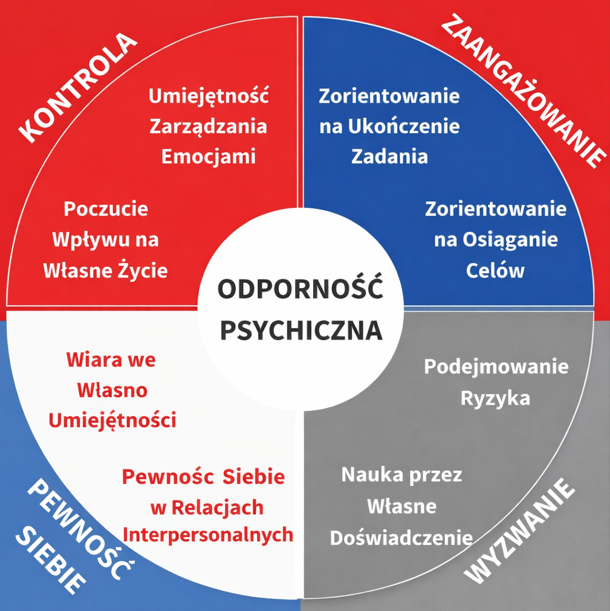
Mental resilience and a healthy work environment
Support Areas

Anti- mobbing
During this training, we learn to recognize bullying and discrimination and how to distinguish them from conflict or difficult but acceptable work situations. We analyze the mechanisms behind these phenomena—from stereotypes and prejudices, through the behavior of perpetrators, to the reactions of victims and witnesses. We learn how to interpret specific situations in organizational life and what actions are appropriate and effective when undesirable behavior occurs. We also address legal aspects, presenting employee rights, employer obligations, and real options for responding and asserting one's rights. The training is workshop-based—participants work with examples, analyze case studies, discuss, practice responses, and develop concrete solutions that they can implement in their organizations.

Stress management workshops I conduct stress management workshops in a practical format, where participants learn to recognize their own reactions to stress and moments of overload. We work with specific techniques such as diaphragmatic breathing, the 4-7-8 method, short tension regulation techniques, and elements of mindfulness and bodywork. I also demonstrate how to change their mindset in stressful situations and regain focus and a sense of control. The entire program is based on exercises and real-life situations, allowing participants to immediately apply what they've learned to their daily work.
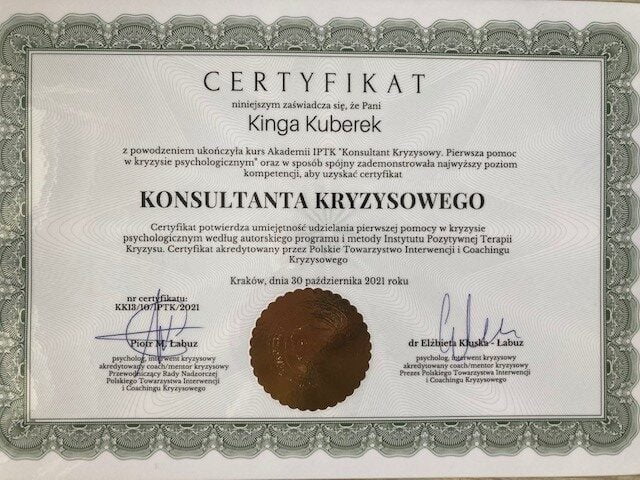
Crisis consultation focuses on immediate support and coping with a crisis situation, while therapy is a more long-term process that may include more comprehensive work on various areas of emotional and psychological life. In practice, however, in some cases, there may be some overlap between both forms of support.
Crisis support in the organization
How to support?
I support organizations and employees through various forms of development and educational work. I conduct individual coaching sessions and crisis support, helping individuals experiencing overload, stress, conflict, and burnout. I also conduct training and development programs for companies, including those in the areas of counteracting bullying and discrimination, communicating in difficult situations, and functioning under pressure. A key element of my work is practical workshops, during which participants learn techniques for coping with stress, regulating emotions, and strengthening mental resilience. I also conduct concentration and memory training, which helps individuals function better in an environment full of stimuli and information. I also support leaders and teams in developing emotional management skills, communication, and building healthy and safe relationships in the workplace. Work options:
- Workshops and skills training
- Anti-mobbing training
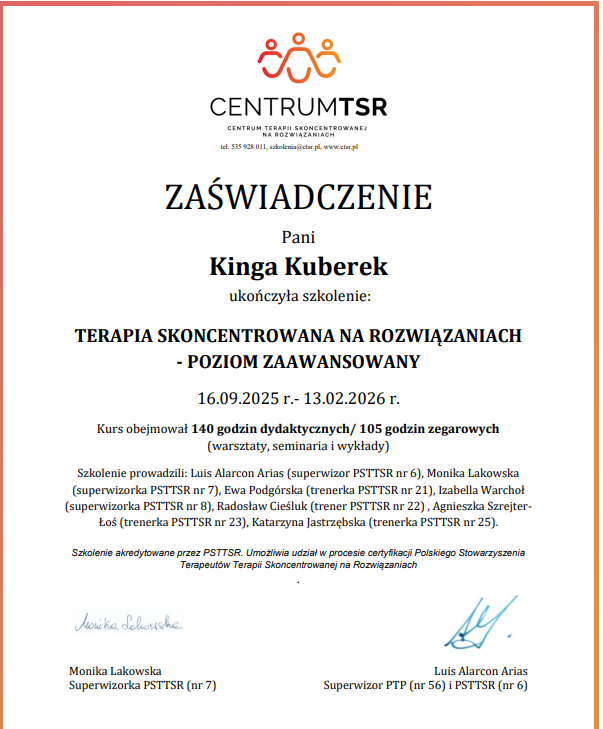
- Short-Term Solution-Focused Therapy (TSR)
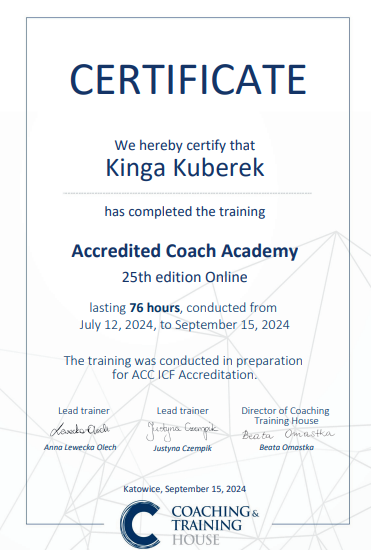
- Crisis coaching
 English
  Polish