FOUR COLORS OF POWER - communication psychology according to the DISC methodology
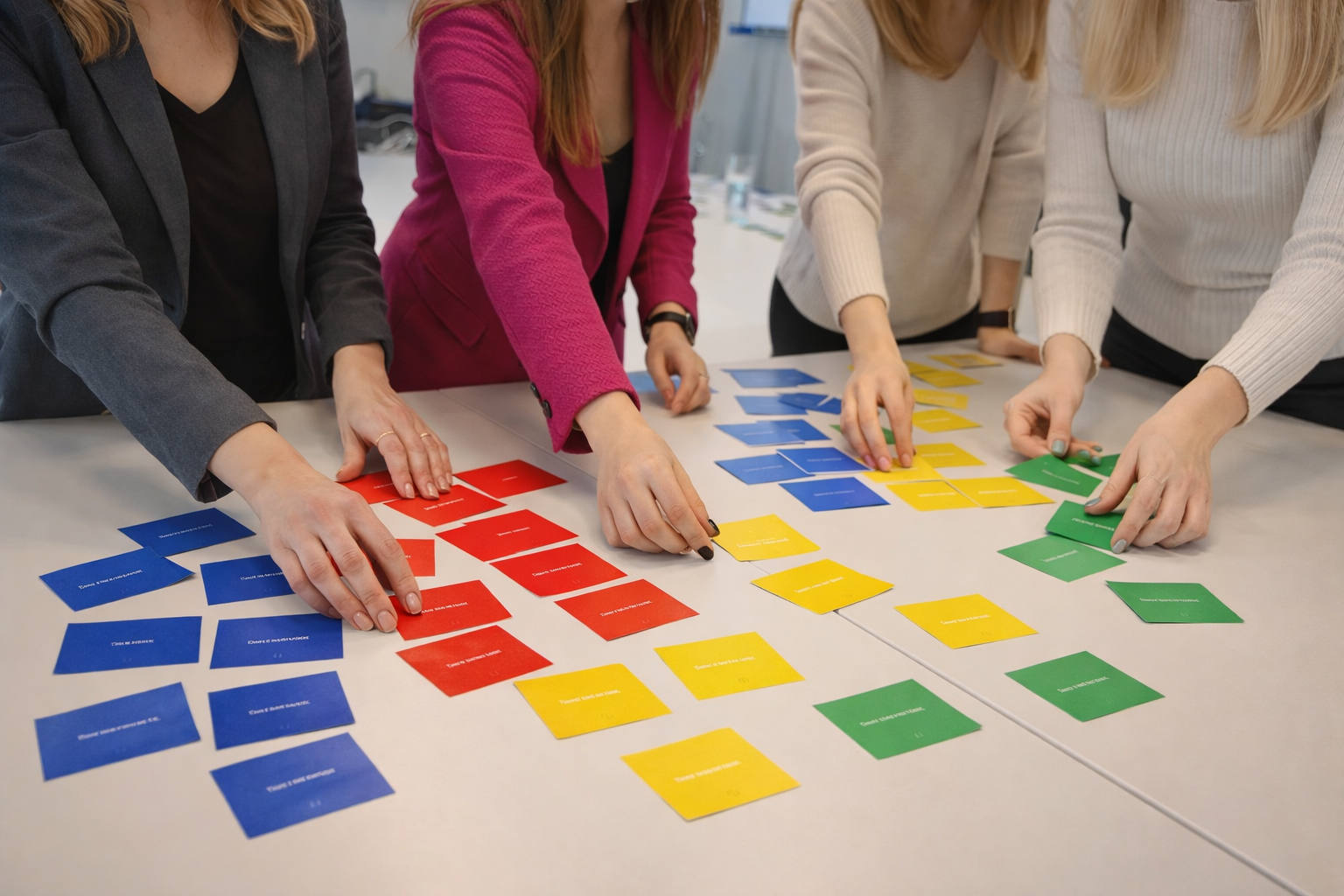
How can we understand people and communicate more effectively? Why, despite good intentions, do misunderstandings, tensions, and frustrations arise within teams—especially under time and performance pressure? The "Colorful Sides of Power" workshop program helps understand how individual differences, temperament, thinking and action styles influence the way we perceive the world, make decisions, and collaborate. Participants will learn to understand their natural styles and recognize the styles of others – both in face-to-face communication, via email, and when working under pressure. They will learn about barriers and how to recognize and interpret human defense mechanisms. The workshop demonstrates how to adapt communication to the interlocutor to increase effectiveness and reduce tension. The entire workshop is based on practical situations from real-life teams – participants work on their own examples and real-world project challenges.
Effects for the organization:
- Teams are beginning to better understand differences in work and communication styles, significantly reducing misunderstandings and misinterpretations. Communication quality improves – it becomes more precise, tailored, and informed, which translates into greater project effectiveness. Managers gain specific tools for conducting conversations, delegating tasks, and managing teams in a way that is more tailored to their people. The organization gains a more cohesive, aware team that can collaborate better even under pressure and high work dynamics.
- DISC Methodology
- Common interpretation errors
- Self-diagnosis of thinking and acting style
- Language semantics - precise message
- When we activate defense mechanisms
- 4 temperament styles
Further support:
The natural next step is an in-depth diagnosis of DISC behavior styles – MAXIE DISC TEST For teams and managers, it's an online psychometric test that results in a 15-page report. The study also includes a one-hour introductory session with a certified consultant. This allows for a more precise assessment of employee potential, how they react to stress, and communication preferences. Based on this, further action can be planned: developing leaders, adapting management styles, building project teams, or improving collaboration between departments. This allows for a shift from "awareness" to real change in the organization's daily operations.
Maxie DISC Diagnostic Tool
An online psychometric test. After completing the test, a comprehensive report is generated containing information such as: a description of the model, style characteristics, the individual's behavioral styles, and their graphs with descriptions, as well as a description of attributes, strengths and potential, and possible threats.
UNDERSTANDING GENERATIONS: Generation Z, Diversity
Have you ever wondered why, in one team, some expect stability and clear rules, while others need flexibility, meaning, and quick feedback – and how these differences affect communication, engagement, and work efficiency, especially today, when Generation Z is entering the job market?

- Better understanding of generational differences
- Improving communication
- Higher engagement and motivation of teams
- Lower employee turnover
- Lower recruitment costs
- More effective task execution
Proposed training program:
Module 1.
Understanding generations
- Where do generational differences come from?
- The influence of upbringing, technology
-
How does each generation think and act?
Module 2.
Intergenerational communication training
- Speaking precision training
- What do they mean?
- How to speak to be understood?
Module 3
Synergy of diverse teams
- How to create good conditions?
- Learning from each other
- Special task
- Group roles
Training methods
Case work, lecture, experience analysis, behavior recognition quiz
 English
  Polish